


Busy Comments, Quiet Sales: What to Measure After the Likes
ENYEMAKA team ·
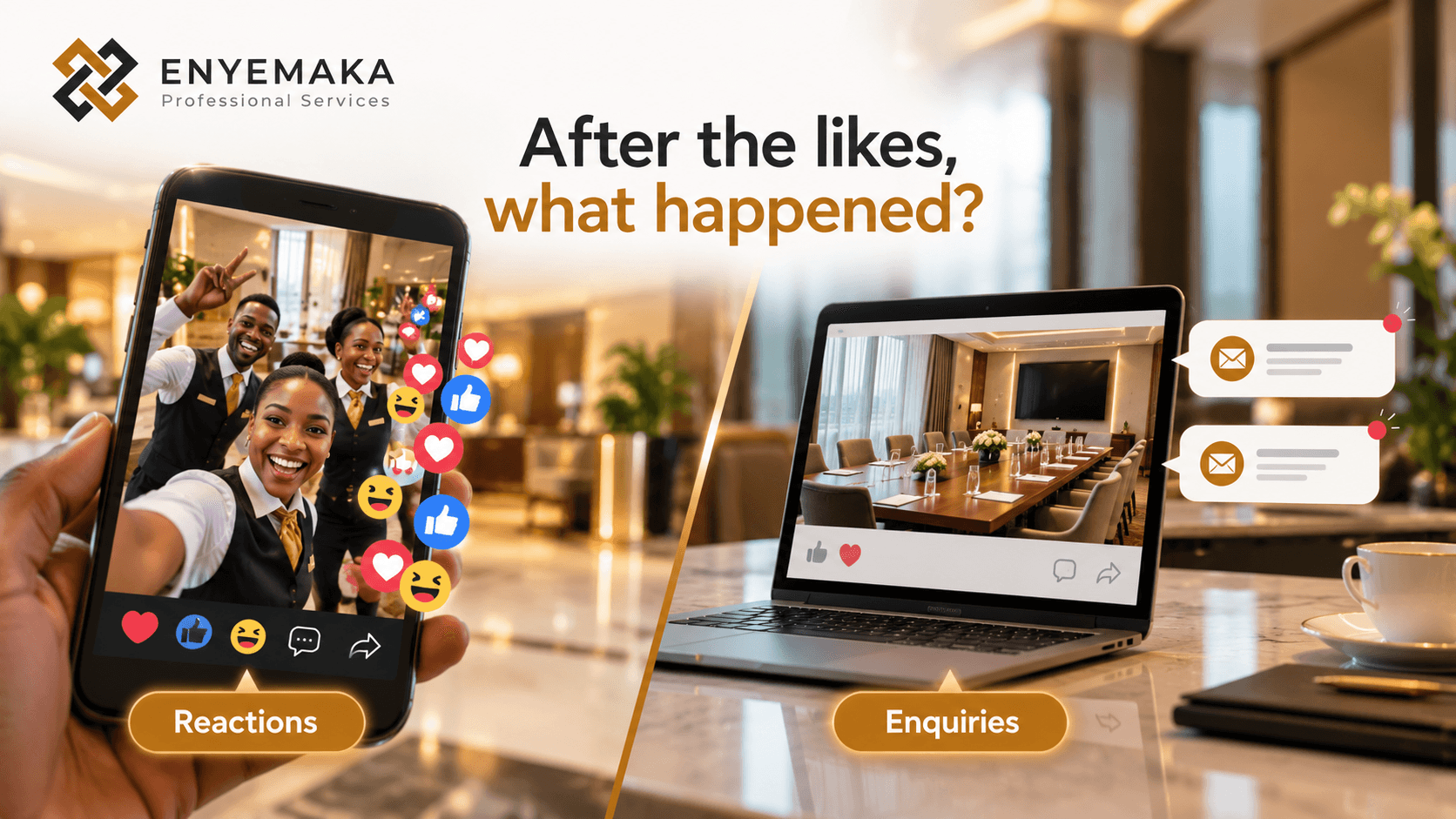
Imagine a hotel posts two things in the same week.
The first is a funny video of staff reacting to a guest's unusual request. It takes off. Hundreds of reactions, dozens of comments, shares from people who've never stayed there. Friends tag friends. Students love it. Other creators reply with their own versions.
The second is a plain post explaining the hotel's corporate meeting package: room for up to 40 people, what's included, how to book. It gets a handful of likes. But two office administrators send messages asking whether the package would work for their team's planning day next month.
Which post did better?
It depends entirely on what you're asking.
Two different signals
Both posts did something useful. They just did different things.
Reactions tell you people interacted. The funny video was seen, enjoyed and passed around. That builds familiarity. Some of those viewers may remember the hotel's name later, when they need a venue or a room.
Enquiries tell you someone recognised a relevant offer. The two administrators saw something that might solve a real problem they have right now. They took the step of getting in touch.
Neither number should pretend to be the other. A thousand reactions aren't a thousand potential customers. Two enquiries aren't a failure because the post looked quiet.
Not every enquiry is equal either
Once the enquiries arrive, the work isn't finished. Each one needs to be checked for three things:
- Fit. Is this the kind of booking the package was designed for? A team of 25 needing a projector fits. A wedding for 300 doesn't.
- Timing. When do they need it? Next month is a live opportunity. "Sometime next year" is worth keeping warm, but it's a different kind of lead.
- What they actually want. Some people ask about the package but really want something else, such as a cheaper room-only option. That's still useful to know.
Two well-fitting enquiries with near-term dates are worth far more to a sales team than twenty vague ones.
Why reaction-only reports lead you astray
Many monthly social media reports stop at reach, impressions and reactions. That's understandable. Those numbers are easy to pull and they usually go up when content is entertaining.
The problem is what happens next. If every post is judged only by reactions:
- The team keeps making more entertaining content, because that's what "works".
- The explanatory posts, the ones that describe what you sell and help people decide, look like failures and get dropped.
- Over time, the account gets more popular but brings in fewer real customers.
It's an easy trap because nobody is doing anything wrong. The report is just measuring the wrong finish line.
Keep the entertaining content
This isn't an argument against fun posts. Familiarity matters, especially in hospitality, where people often book places they've heard of. A memorable video can be the reason someone recognises your name when a colleague suggests your hotel.
The point is balance. You need some posts that make people notice you, and some that help the right people decide. And you need to measure each by what it's meant to do.
A better monthly report
A more useful report follows people from first noticing you to actually booking. It doesn't need to be complicated. Four layers are enough:
- Attention: reach, views, reactions. Did people see it?
- Interest: profile visits, link clicks, saves, direct messages. Did anyone want to know more?
- Enquiries: how many, and how many fitted the offer and had real timing.
- Outcomes: bookings and their value, where you can trace them.
Most businesses only report the first layer. Adding even the third makes the report far more useful to the people selling.
How to connect enquiries to posts
The honest answer is that you won't trace every booking perfectly. But a few simple habits get you much closer:
- Ask. "How did you hear about us?" on every enquiry form and in the first reply.
- Use different links for different offers. A separate booking link or enquiry form for the meeting package tells you which post sent the traffic.
- Use pre-filled WhatsApp messages. A link that opens a chat saying "Hi, I'm asking about the meeting package" tells your team exactly what the person saw.
- Log enquiries in one place. Even a shared spreadsheet with date, source, offer and outcome is enough to spot patterns after a month.
These won't give you perfect data. They'll give you enough to stop guessing.
The question after the likes
When you review your next report, look past the reaction count and ask:
- Who actually got in touch?
- Were they the kind of customer this post was meant for?
- What did they understand, and what did they still need to ask?
That last question is often the most useful. If people keep asking the same thing, the answer belongs in your next post.
What do you check after the likes?
If you'd like help setting up reporting that your sales team can actually use, tell us what you're working with.